Disclaimer: The medical information contained in this article is for general reference only and should not be regarded as medical advice. If you experience symptoms such as fever, bleeding, dizziness, chest discomfort, shortness of breath, decrease in consciousness, or any other emergency medical situations, please seek immediate medical attention from the nearest healthcare facility.
Travelling North Is Not Just About Yourself — It Is Also About Caring for the Family Members Travelling with You
In recent years, many Hong Kong families have made it a habit to travel north on weekends or public holidays for dining, shopping, and short trips. Elderly parents often accompany their children to Shenzhen and other cities in the Greater Bay Area to enjoy a relaxing day together.
Most journeys are smooth and enjoyable. However, many family caregivers spend a great deal of time planning the itinerary but overlook one important question:
If a family member suddenly becomes unwell during the trip, would you know what to do?
Being in an unfamiliar environment, together with differences in medical systems, hospital procedures, and payment arrangements between Hong Kong and Mainland China, can make an unexpected medical situation even more stressful for accompanying family members than for the patient.
Without some basic preparation, valuable time during the early stages of an emergency may be lost.
The following are three common health situations that family caregivers may encounter while travelling north.
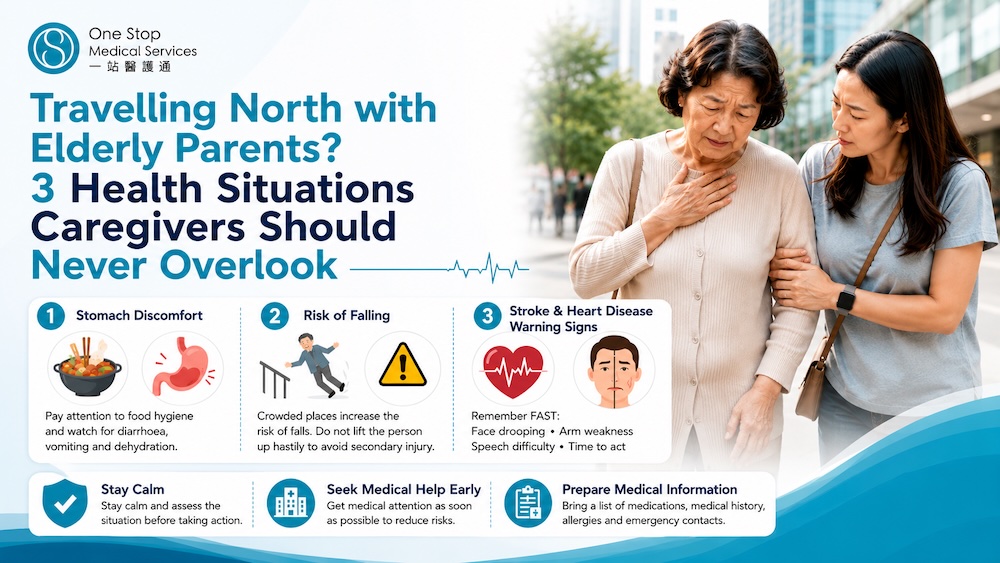
1. An Elderly Family Member Develops Stomach Problems — It May Not Be Simple Indigestion
Many families enjoy trying local specialities when travelling north, including hotpot, seafood, marinated raw dishes, and spicy cuisine. Elderly people with sensitive digestive systems, diabetes, or chronic medical conditions may not adapt well to sudden dietary changes.
If persistent diarrhoea, vomiting, abdominal pain, or dehydration occurs, do not simply assume it is ordinary indigestion.
What Can Family Caregivers Do?
- Encourage the patient to drink sufficient fluids and replenish electrolytes.
- Monitor the frequency of diarrhoea and vomiting.
- Seek medical attention promptly if there is persistent high fever, blood in the stool, severe abdominal pain, or worsening mental condition.
Many people take anti-diarrhoeal medication immediately, but self-medication may not be appropriate in every situation. If in doubt, seek assessment from a healthcare professional.
2. After a Fall in a Crowded Place, Do Not Rush to Help the Person Stand Up
Shopping centres, railway stations, night markets, and popular tourist attractions are often crowded. Older adults are more vulnerable to falls because of reduced balance and slippery surfaces.
When an elderly family member falls, many relatives instinctively try to help them stand up immediately. However, if there is a fracture or head injury, moving the person too early may actually worsen the injury.
What Can Family Caregivers Do?
- First check whether the person is conscious.
- Observe whether there is severe pain or an inability to move the arms or legs.
- If a fracture or head injury is suspected, avoid moving the patient unnecessarily.
- Seek medical assistance as soon as possible if required.
Remaining calm is often more important than rushing to lift the injured person.
3. Do Not Ignore the Early Warning Signs of Stroke and Heart Disease
Many elderly people already have high blood pressure, high cholesterol, or diabetes. Long journeys, hot weather, busy schedules, and richer-than-usual meals may further increase the risk of cardiovascular and cerebrovascular diseases.
If your accompanying family member suddenly develops any of the following symptoms, do not assume they are simply tired:
- One side of the face drooping
- Weakness in one arm or leg
- Slurred speech
- Sudden severe headache
- Persistent chest pain
- Difficulty breathing
Remember the FAST Principles for Stroke
- F (Face): Is one side of the face drooping?
- A (Arm): Is one arm weak or difficult to raise?
- S (Speech): Is speech slurred or unclear?
- T (Time): Seek medical attention immediately. Every minute matters.
The earlier medical assessment begins, the greater the chance of reducing long-term complications.
Good Preparation Before the Trip Is Better Than Panicking Afterwards
Many caregivers remember to pack phone chargers, snacks, and drinking water, but often overlook medical preparation.
Before travelling, consider preparing:
- Hong Kong Identity Card and Home Return Permit
- A list of regular medications
- Information about chronic medical conditions
- Allergy records
- Emergency contact details
- A fully charged mobile phone
These simple preparations may save valuable time if an emergency occurs.
Peace of Mind for Your Family Is More Important Than the Itinerary
Travelling north should be an enjoyable experience, and fortunately most trips are completed without any medical emergencies.
However, for family caregivers, being a little better prepared can make a significant difference during an unexpected situation.
Understanding basic first aid, recognising common health risks, and preparing important medical information in advance can help both you and your loved ones respond more calmly and confidently when emergencies arise.
One Stop Medical Services — Supporting Every Step of Your Family's Journey
One Stop Medical Services provides professional bed-to-bed medical escort services, helping patients and their families navigate complex transportation and administrative arrangements with ease. Our experienced medical team ensures that patients receive appropriate medical supervision, care and support throughout their journey.
For a free consultation, please call or WhatsApp us at +852 9788 9115
#TravellingNorth #ElderlyParents #FamilyCaregiver #ElderlyHealth #CaregiverTips #TravelHealth #StomachDiscomfort #FallPrevention #StrokeWarningSigns #HeartDiseaseWarningSigns #FASTStrokeAwareness #MedicalPreparation #MainlandMedicalCare #FamilyCare #OneStopMedicalServices