


The Part Families Often Overlook Is Not the Train – It Is the Gaps Between Each Stage: What Is Bed-to-Bed Medical Escort?
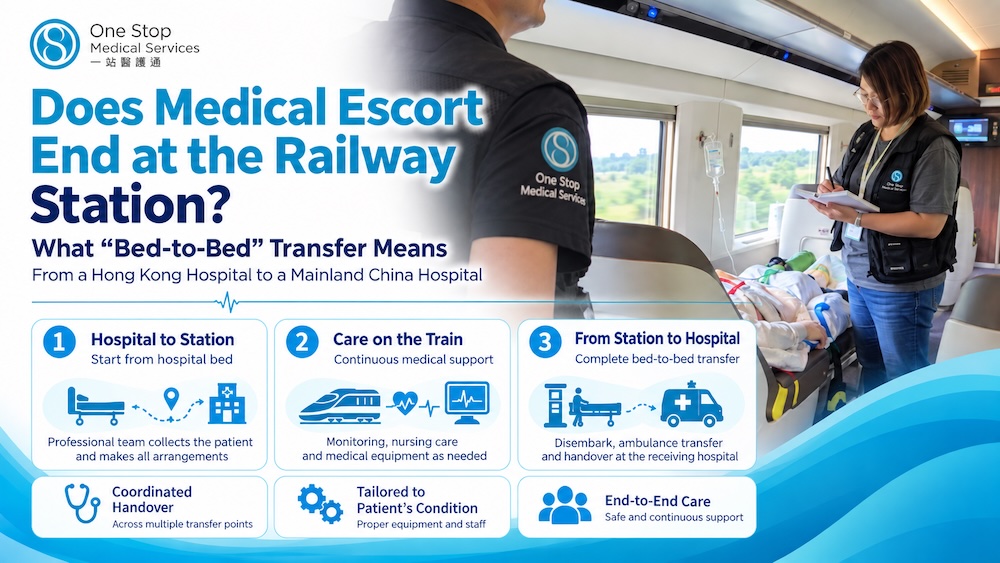
Does a cross-border hospital transfer always require an ambulance? High-speed rail, road ambulance and air transport each have different strengths and limitations. This article compares the three options and explains why patient condition, oxygen, equipment, positioning and the complete bed-to-bed route matter more than travel time alone.
Does a Cross-Border Hospital Transfer Always Require an Ambulance? Comparing High-Speed Rail, Road Ambulance and Air Transport
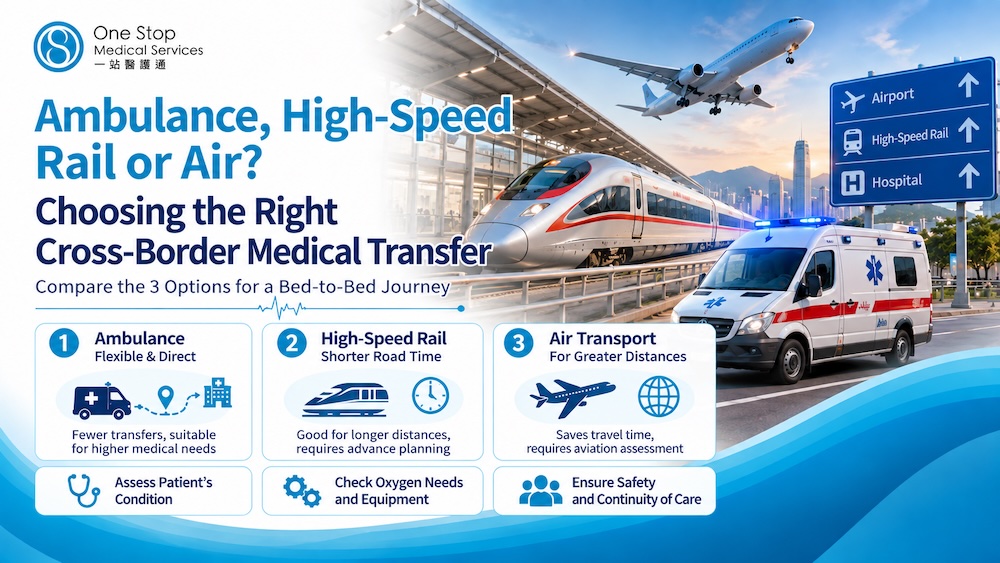
Does a cross-border hospital transfer always require an ambulance? High-speed rail, road ambulance and air transport each have different strengths and limitations. This article compares the three options and explains why patient condition, oxygen, equipment, positioning and the complete bed-to-bed route matter more than travel time alone.
For a Patient Transferring by High-Speed Rail, the Most Overlooked Part Is Often Boarding and Disembarkation
When arranging a cross-border hospital transfer by high-speed rail, families should consider more than the journey itself. This article explains the often-overlooked boarding, disembarkation, equipment and ambulance-transfer arrangements involved in a bed-to-bed medical escort.
Does Needing Oxygen Mean a Patient Cannot Travel by High-Speed Rail? What Families Should Know Before a Cross-Border Transfer
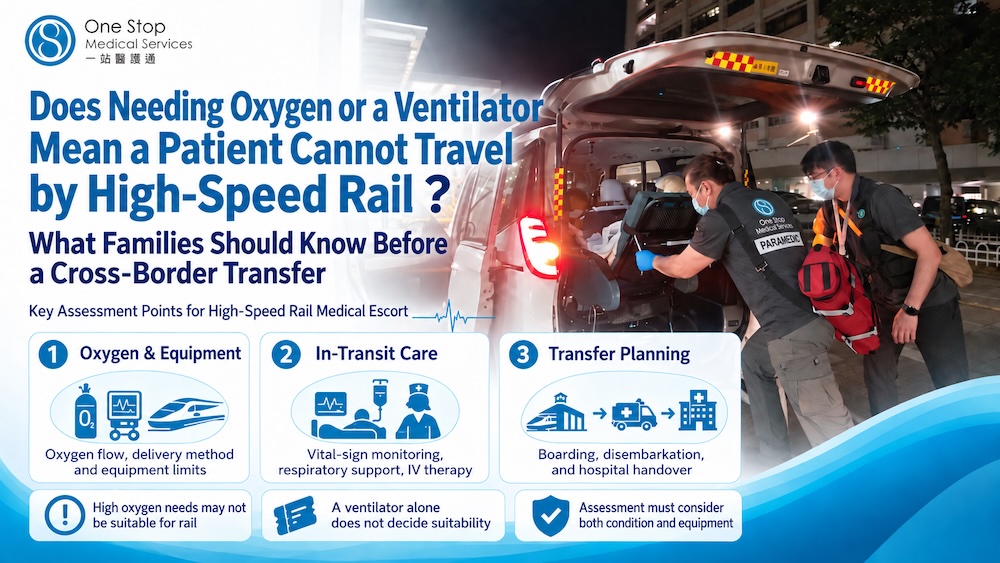
Does needing oxygen or a ventilator automatically rule out high-speed rail? This article explains the medical, equipment and transfer factors families should understand before considering high-speed rail for a cross-border hospital transfer.
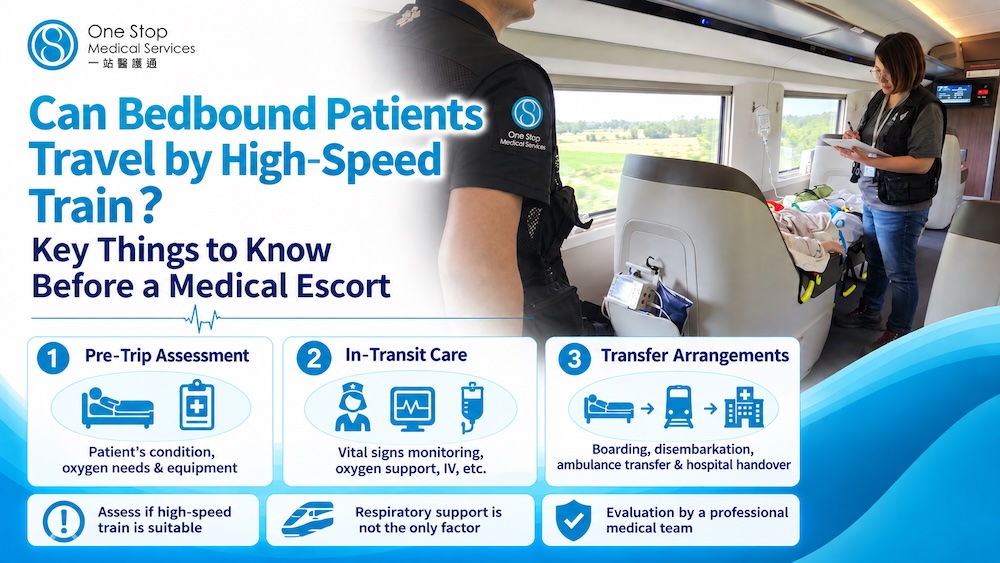
Can a Bedbound Patient Travel by High-Speed Rail for a Hospital Transfer? From Boarding and In-Transit Care to Hospital Handover
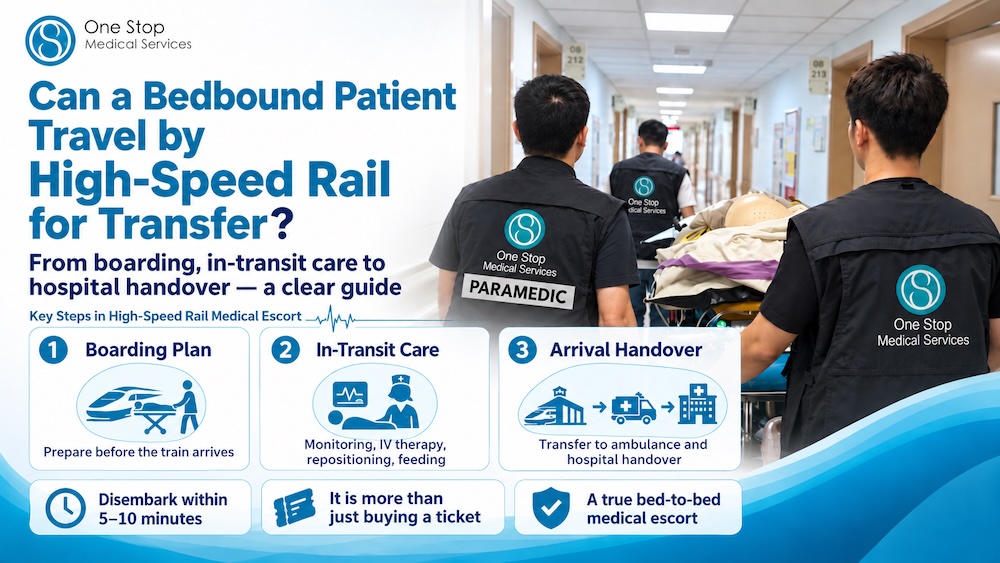
Can a bedbound patient travel by high-speed rail for a hospital transfer? A real medical escort case explains how patient stability, oxygen needs, equipment, in-transit care, boarding, disembarkation and onward ambulance transfer must all be assessed in advance.
Bringing a Family Member Back to Hong Kong After Hospital Discharge in Mainland China? 5 Things to Prepare from the Hospital Bed to the Final Destination
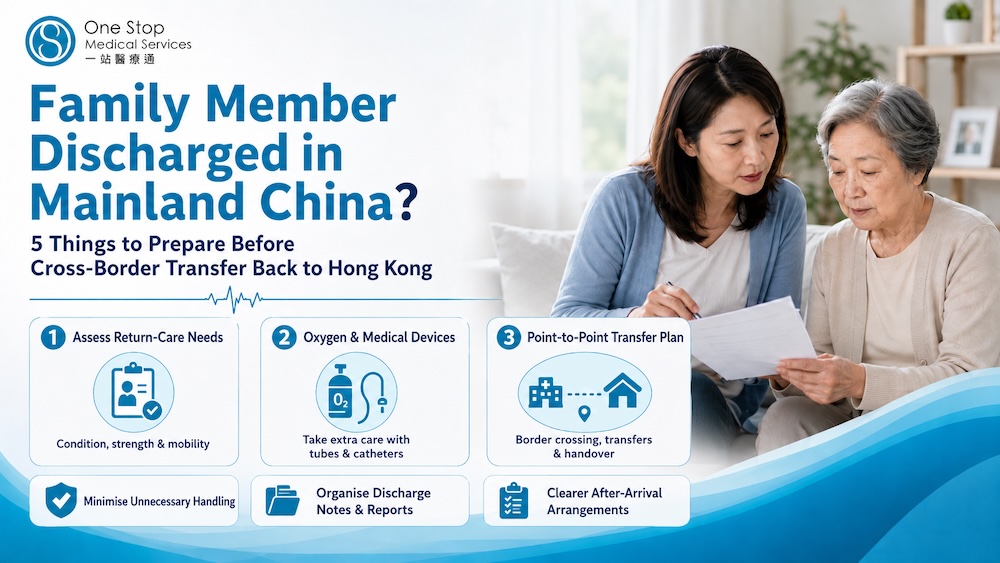
Bringing a family member back to Hong Kong after discharge from a Mainland hospital involves more than booking a car. This guide covers five key preparations: total journey time, oxygen, medical devices, patient transfers, and arrangements at the Hong Kong destination.
Critically Ill After Dental or Cosmetic Treatment in Shenzhen? What Families Need to Know Before Arranging Medical Escort Back to Hong Kong
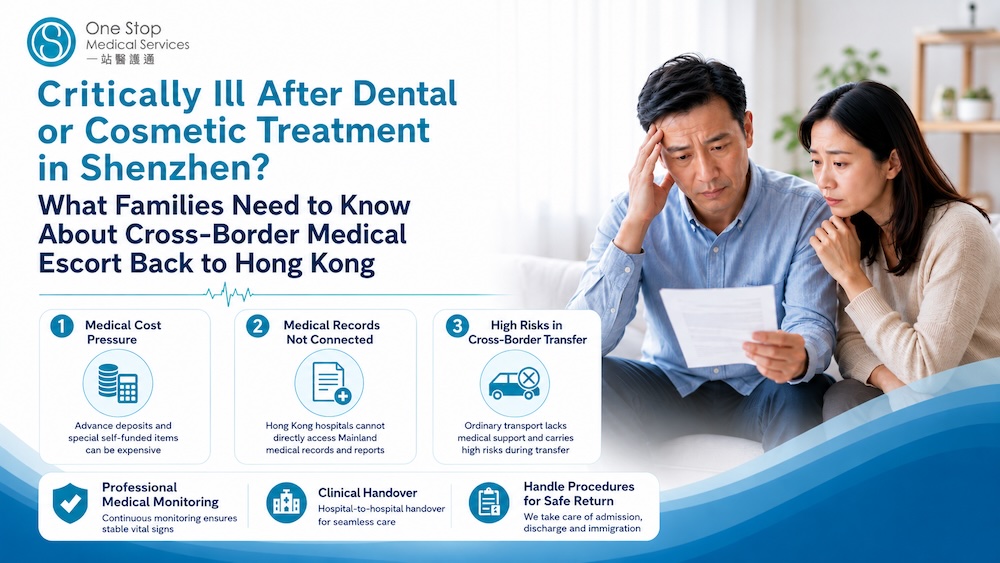
When a family member becomes critically ill after dental or cosmetic treatment in Shenzhen, relatives may need to manage emergency treatment, medical expenses, clinical handover and cross-border transfer at the same time. This article explains the key considerations when arranging medical escort back to Hong Kong.
Cross-Border Hospital Transfer for Older Adults with Dementia or Long-Term Bedridden Conditions: How Can Families Reduce Distress and Secondary Injury During the Journey?
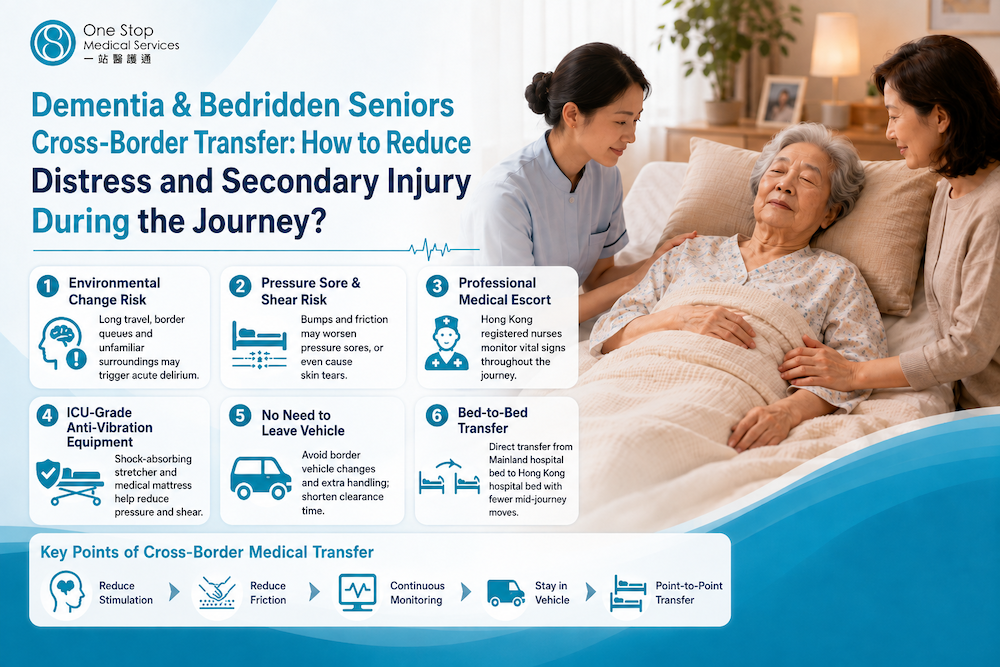
For older adults with dementia or long-term bedridden conditions, cross-border hospital transfer involves more than arranging a vehicle. Families should also consider environmental changes, road vibration, pressure sores, vital-sign monitoring and border transfers when planning a return to Hong Kong for continued treatment.